
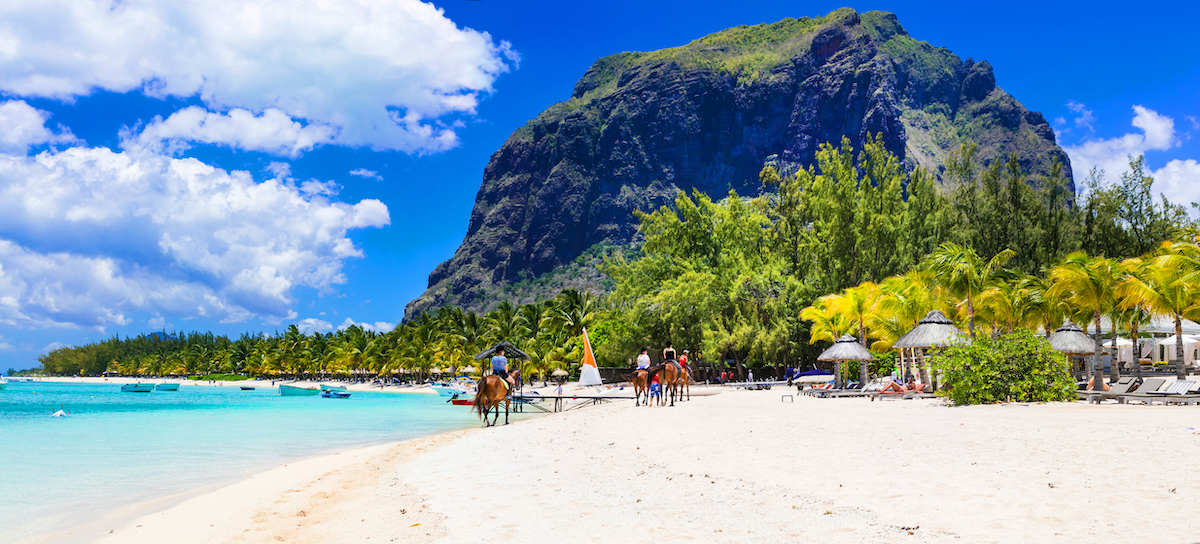
Mauritius: Before You Go
- Check if you require to enter the country with the Mauritian Passport and Immigration Office https://passport.govmu.org/passport/
- If you do require a visa, be sure to apply well in advance of your trip so that your paperwork is in order on your arrival.
- The island’s currency is the Mauritian rupee (MUR).
- If possible, always use banks or official bureaus de change to exchange currency. Local traders may not give you the best possible exchange rate. Banks and bureaux de change can be found at international airports and major shopping malls in Port Louis.
- Diners Club and Amex may not be widely accepted or may attract additional fees. Please bring an alternative card if possible.
- Some establishments may levy a surcharge on credit-card payments.
- Please inform your bank that you will be travelling to Mauritius so that your card is not blocked when you try to use it.
- ATMs / cash points are widely available in airport terminals, malls and banks in Port Louis.
- Established hotels, resorts, shops and attractions generally accept major credit cards.
- Gratuities are never mandatory but are always gratefully received.
- For restaurants, add 10% to 15% of the total bill as a gratuity – more if you feel the service warrants it.
- Your consultant will break down all costs that are covered by your itinerary and those that aren’t. Generally, extras include souvenirs, premium wines and spirits, activities not included, meals not included and personal expenses.
- Eating out in Mauritius is generally affordable but please note that wines, imported beers and international spirits can be more expensive.
- Please ensure you have comprehensive medical and travel insurance to cover all eventualities, including evacuation and CFAR (cancel for any reason) coverage (if possible).
- No mandatory vaccinations are needed to enter Mauritius unless you are arriving from a yellow fever zone.
- All the global safety standards apply: watch your belongings, be aware of your surroundings and keep to well-lit, main areas.
- Always obey any instructions from activity guides, boat captains or lodge staff.
- Do not try to attract wild animals’ attention under any circumstances or walk and swim in areas that are out of bounds.
- Mauritius primarily uses Type G (British 3-pin) and Type C (Europlug 2-pin) sockets, operating at 230V and 50Hz. While many hotels have Type G, it is highly recommended to bring a universal travel adapter that accommodates both 2-pin and 3-pin plugs, as both types are in use across the island.
- Most hotels and resorts have international plug adaptors but it is best to bring your own.
- The voltage is 230V and the frequency is 50Hz so be sure to check that your appliances are compliant – you may need to bring a voltage converter.
- If you are going on safari first, your luggage limit may be 15kg / 33lb in a soft-sided bag. Select items that can be worn in the bush as well as on the island.
- Closed reef shoes, sunglasses, sunscreen and a cap or hat are highly recommended.
- As far as possible, bring eco-friendly toiletries.
- Bring extras of necessities like contact lenses, medications and reading glasses.
- Resorts and hotels generally offer a paid laundry service. If you are coming off a safari, see if your camp or lodge will do your laundry at least two days before you leave for Mauritius so you arrive with some clean clothing. Safari camps and lodges will generally not wash underwear so factor that into your wardrobe planning.
- Mauritians in the hospitality industry are generally helpful, friendly and cheerful people. English is widely spoken.
- It is normal to greet staff before starting a question or complaint. Politeness is prized.
- Be mindful when passing through island villages. Ask permission before photographing people, buildings or homes, and respect children or the elderly. Ask yourself whether you would like a stranger photographing your children without permission, outside your home.
- It may be illegal to photograph police stations, border points, airports, military buildings, government buildings or soldiers and other officials.
- The island’s seasons are the opposite to the northern hemisphere’s: summer runs from about January to April and winter from about May to December. It has wetter summers and slightly drier winters.
- The cyclone season is between January and March.
- The temperature of the Indian Ocean ranges from 22ºC to 27ºC / 72ºF to 81ºF.
| Minimum | Maximum | |
| Summer (Jan to April) | 25°C / 77°F | 33°C / 91°F |
| Winter (May to December) | 18°C / 64°F | 26°C / 78°F |