
CAN I USE UBER TO GET TO MY SAFARI LODGE?
- This is their first safari and they don’t know what to expect.
- They believe it will save them money and time.
- They are familiar with using such services at home.
- They want to be more independent travellers.
- They are unfamiliar with conditions and distances.
- They are used to DIY travel arrangements.
- Distances are long. You may be lucky enough to find a driver who is willing to drive you from Johannesburg to, for example, Pilanesberg National Park but how will you get back?
- Drivers choose passengers so as to avoid ‘dead legs’ : the chance of him (and almost all Uber drivers in Africa are men) finding passengers wanting to go from the reserve back to a city are very, very low. This could leave you stranded or struggling to find a return transfer. Private transfer vehicles booked in advance; public transport is also extremely limited.
- Driving standards vary. Although drivers are supposed to have qualifications and insurance, there may be little enforcement of these standards.
- Drivers may not own their vehicles. Very often, a fleet owner hires drivers and issues them with a car and determines which passengers they will transport. If something goes wrong, recourse can be complex.
- Vehicle standards can vary. Although there is a maximum age limit for cars, there may be little enforcement of how often these vehicles are serviced, how often tyres are changed or even how clean they should be.
- Emergency procedures and protocols may not be in place. In a city, a driver could get help more easily in a breakdown but that is not the case in a remote, rural area.
- Drivers are not professionally trained to handle wildlife encounters. This is a big one. If your Uber driver encounters a breeding herd of elephants on the road, for instance, he will not be able to ‘read’ their behaviour and warning signs, putting both the animals and you in grave danger.
- Taxis may simply not be able to cope with the terrain. Trained drivers in specialist transfer vehicles can deal with dirt roads, mud, rain, potholes, corrugations or gravel.
- Drivers may not know the way and may get lost or be late. Many rely on GPS even in cities. GPS is often incorrect in rural areas or non-existent. In reserves, roads get damaged or blocked. All have cut-off times when the main gate closes and guests have to be at the lodge for the evening (this is so that night-time anti-poaching units do not confuse legitimate vehicles with outsiders).
- Drivers may not have knowledge, water or Wi-Fi . As a freelancer, your Uber driver will unlikely offer any extra services such as being able to talk knowledgeably about the wildlife, or even have water on hand. Most cabs will not have onboard Wi-Fi.
- Your driver may not know safe and clean local places for snacks or bathroom breaks . Regular, registered transfer drivers will have a roster of reliable shops, restaurants and garages to use en route.
- English is variable . Many drivers may be from other African countries and so English may not be a first language.
- Vehicles may not be large enough for more than two passengers and your luggage . If you are a group of three or more, you may be to split up or face an uncomfortable, cramped journey.
- We know where you are every step of the way. Because we have organized your entire itinerary, we know who you are with and where you are. This may not be the case if you use Uber.
- You have paid the full costs upfront. There are no surprises in store for you. The beauty of a fully inclusive safari is that, once you are in Africa, only incidental expenses and tips remain.
- You are travelling in a professionally maintained, comprehensively insured vehicle with a qualified driver who speaks English. Drivers are required to have PDPs (professional driving permits) that are valid for two years and entail a medical examination to ensure they are fit to drive long distances. They are also required to be fully sober before starting a shift.
- Your driver will know the route, timings and day-to-day conditions . His relationships on the ground with gate staff, law-enforcement officers and even shopkeepers will be integral to your enjoyment and peace of mind.
- The vehicle will be comfortable and spacious enough . We ensure that couples and groups have sufficient space for themselves and their luggage. Should two vehicles or baggage trailers be required, they are linked on the same booking with the same company so there can be no mishaps.
- You will be collected at the correct time to ensure you can catch your flight home or make your next transfer . Because professional transfer drivers know the routes and any obstacles along the way, they can ensure your schedule is not delayed in any way.
- You will have door-to-door service. Transfer drivers will never just drop you off and leave you – they will always do a handover with the next driver, lodge staff or hotel team.
- In the unlikely event of a mishap, you have support. The reputable companies we use have comprehensive insurance and have relationships with the authorities in the areas they operate.
- Emissions containment. We are proud that Biggestleaf transfers has an award-winning programme to offset our emissions – at zero cost to our clients. We pay to our emissions professionally offset through a legitimate audit scheme. READ MORE: Biggestleaf transfers’ award-winning carbon offset scheme
- We can ensure your transfers can cross borders. Two of the most common crossings are between Livingstone in Zambia and Victoria Falls Town in Zimbabwe, and Vic Falls Town to Kasane in Botswana at Chobe National Park. Although the distance may seem short on a map, there are complex border arrangements that professional drivers handle all the time.
- We can share any special requests or considerations. If you have medical conditions, special interests or a change of plans, we can instantly share that vital information with our drivers.
- Have to up-to-date accreditation including PDPs.
- Have comprehensive insurance through the company.
- Obey speed limits and the rules of the road.
- Be sober and conscientious.
- Speak English and offer excellent service.
- Make arrangements to accommodate luggage (with sufficient notice).
- Offer bathroom breaks, snack stops if needed, bottled water and Wi-Fi onboard.
- Know the route and terrain.
- Hand you over to the correct person for the next stage of your journey.
- Be able to handle unforeseen emergencies.
- Be in contact with the rest of the Biggestleaf team and your lodge.
- Have all qualifications necessary to drive professionally and legally in South Africa.
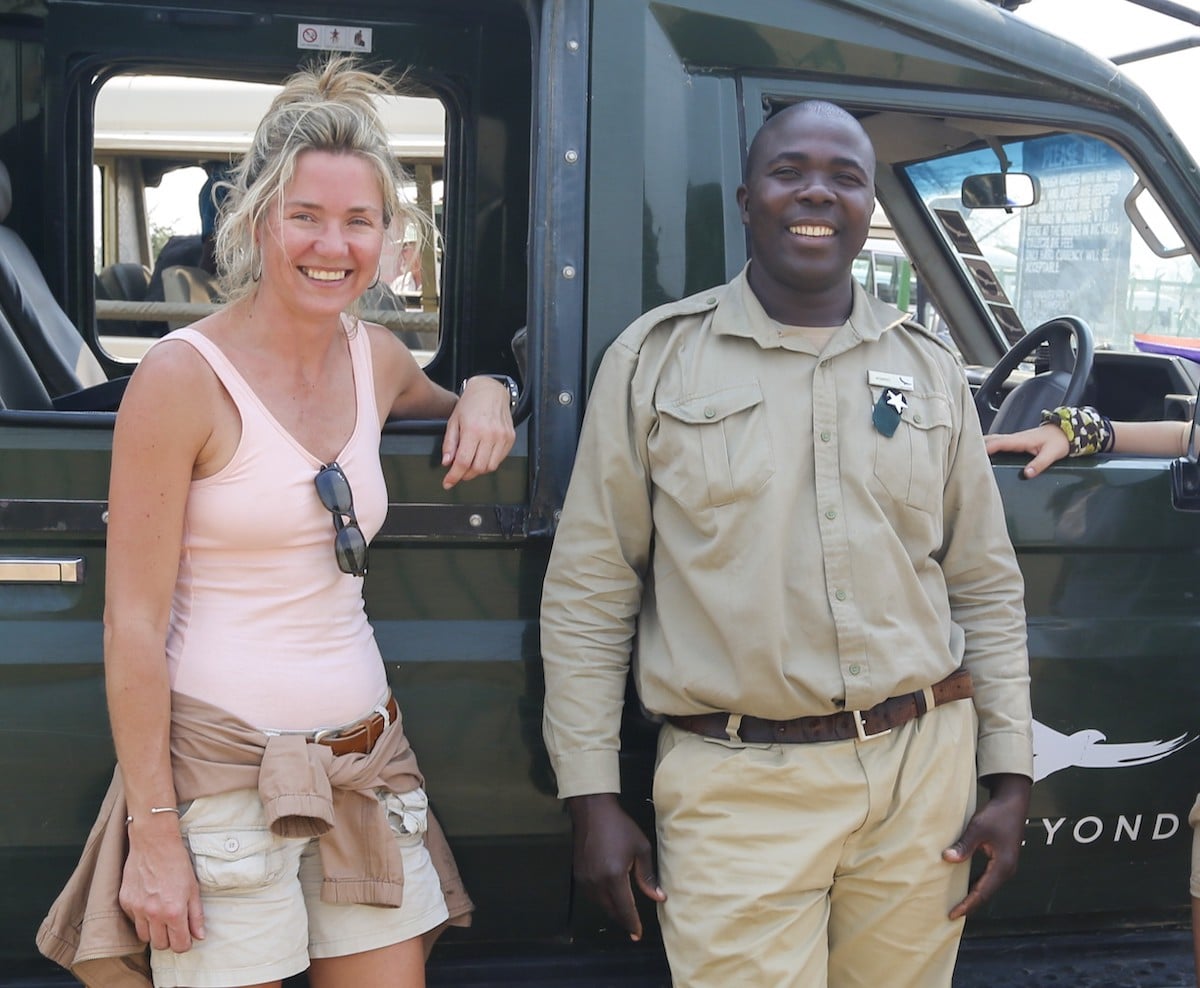
Written By Angela Aschmann
Angela has taken transfers everywhere from Nairobi in Kenya to Kigali in Rwanda, and from Kasane to Livingstone, Lusaka, Johannesburg and Vic Falls. Sharing time with a transfer driver from the airport to your overnight hotel or lodge is a fun part of your safari – she’s leant a huge amount just chatting to the driver about passing scenery, local news and traditional customs.
Read More
We love helping first-timers come on safari. There is so much to see, do and experience. Please browse our expert FAQs so you can get the most of out your trip and have a smooth planning process:
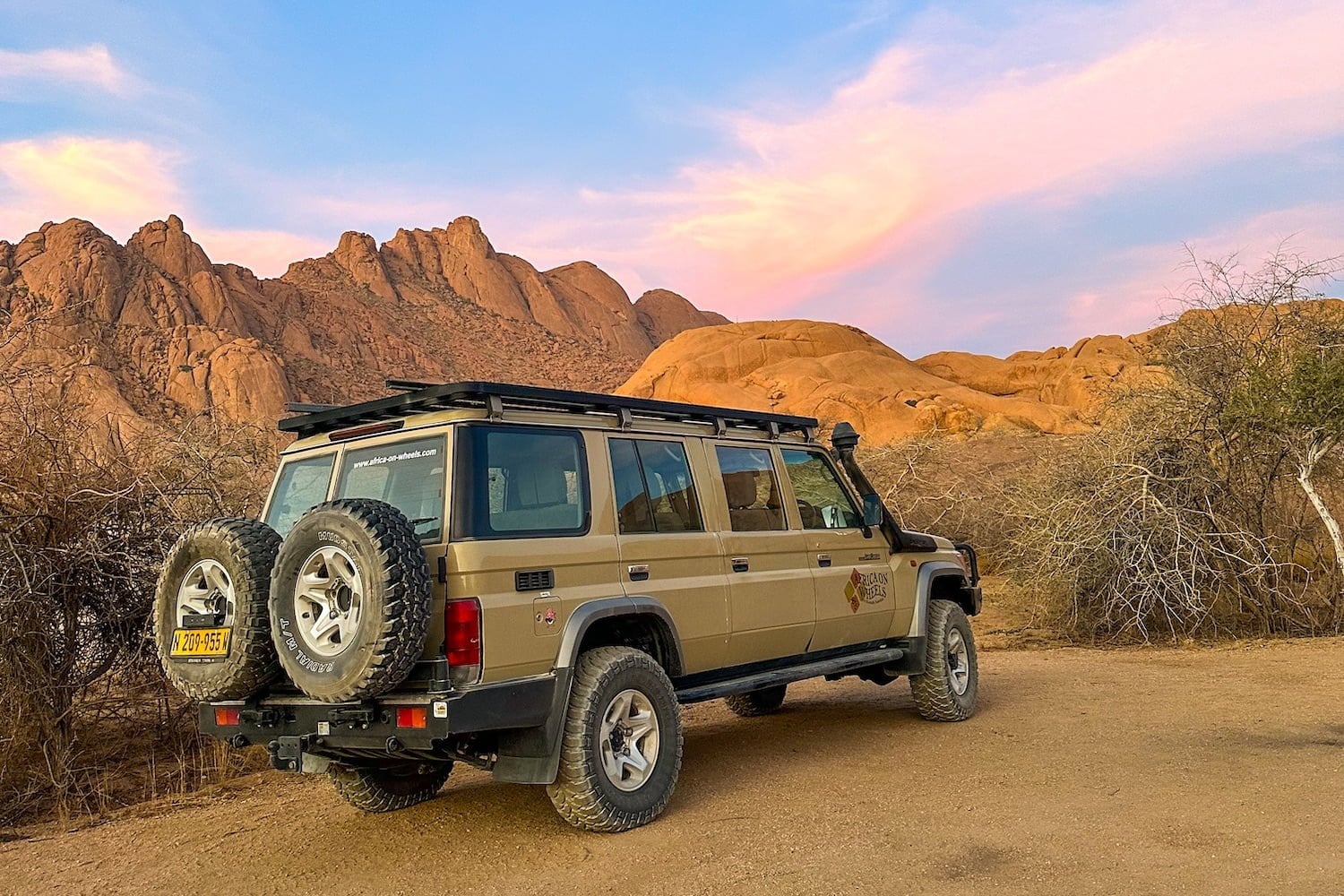
What should you know about self-driving in Africa?
What you need to be aware of before embarking on a self-drive adventure.
Find out more
Why You Can’t Easily Use AI to Plan Your Safari
Can you harness the power of AI to plan a safari? What are the pros and cons of using ChatGPT for an African holiday?
Find out more
How To Budget For Your Safari: A First-Timer’s Guide
Safaris range from back-to-basics to super luxe: your budget (and how to allocate it) is the foundational starting point for your African vacation.
Find out more